

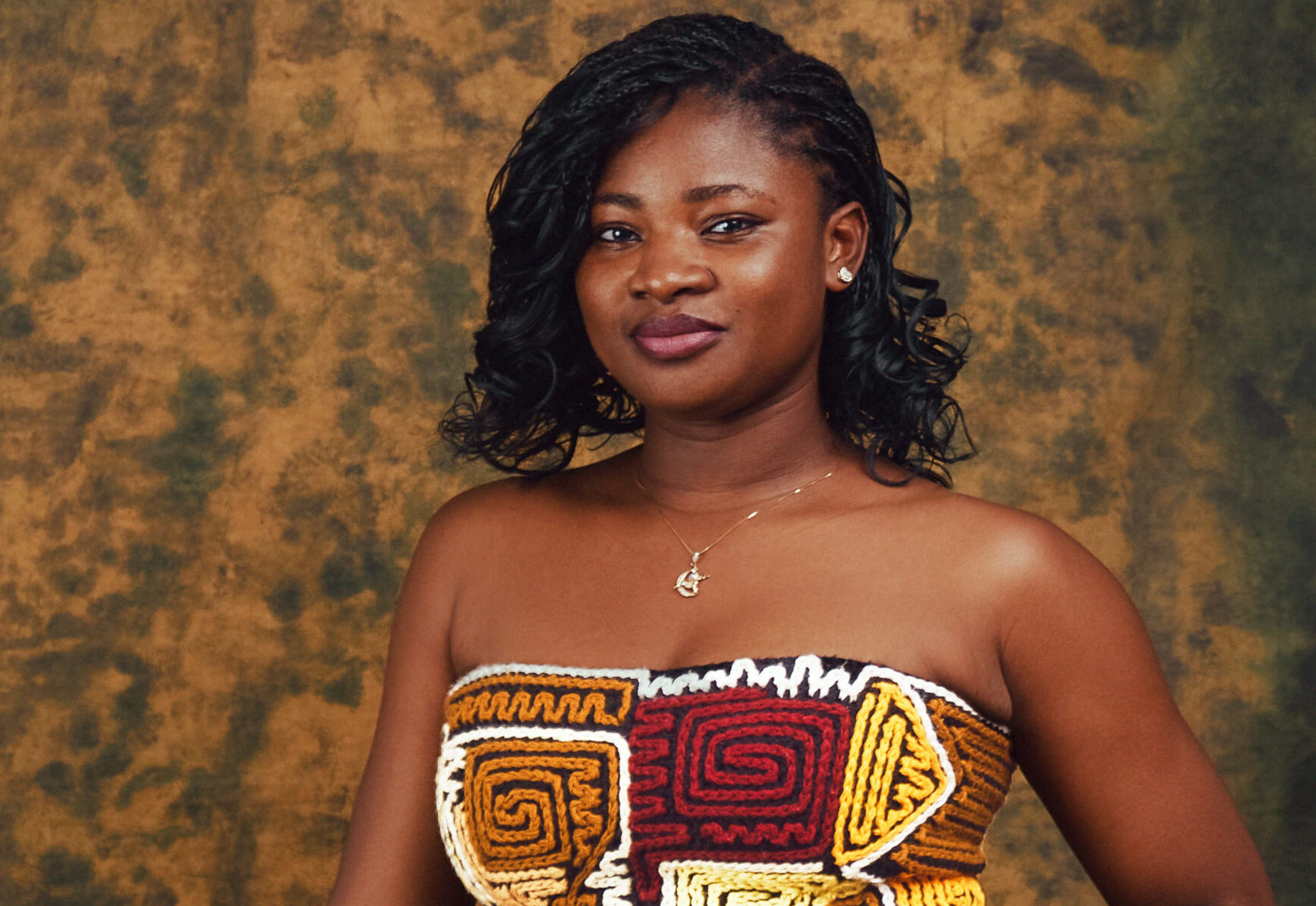
For most of my life, I had two names.
There was the name on my school records, the name my church knew, the name that made people nod with familiarity. That was ‘Esther’. A good name. A safe name. A name that asked nothing of anyone and raised no eyebrows. And then, there was the name my mother called me at home, ‘Adéolá’, the one that sat quietly in the background, like something beautiful you keep in a drawer because you’re not sure the world is ready for it.
I was born ÌFÉ first. It means love in Yòrùbá. But in the Nigeria I grew up in, a name that wasn’t English, Hebrew or Arabic was read as a statement, and not always a welcome one. A traditional name meant your family had not fully let go of the old ways. It invited assumptions about what you believed, who you worshipped, where your loyalties lay. So many of us grew up with two identities running parallel: the one that moved easily through the world, and the one that actually told the truth about who we were.
I wore Esther for years. It fit fine, the way a borrowed dress fits fine. But it was never mine.
After secondary school, I made a decision. I moved ADÉOLÁ to the front.

It didn’t happen dramatically. There was no announcement, no ceremony. Just a quiet, deliberate shift, rearranging what came first. The English name didn’t disappear; it became my middle name, already woven into my documents, still technically there. But Adéolá was now what I led with. It was now the name I introduced myself with, the name I corrected people with, the name I waited for.
It took years. Old friends took time. Some got there faster than others. But eventually they did, and now I have a reliable signal: if someone calls me Esther today, I know immediately we go way back. I correct them gently. I prefer ‘Adéolá’ now. And I mean it every time.
The name Adéolá is Yòrùbá. It translates roughly as the crown has honour: adé meaning crown, olá meaning honour or wealth. It is not a rare name. You will find many Adéolás in Lagos, in Ògùn, in Ìbàdàn, in the diaspora. Common, even. And yet it is entirely mine, the way your mother’s recipe is entirely yours even if a thousand other families make the same dish. The name carries something. A rootedness. A pride that does not need to announce itself because it simply is.
That quality is what I wanted DÉŌLÁ to have.

When I started taking my crochet seriously, not just as something I did but as something I was building, I needed a name for what I was making. I went through the usual process. Played with concepts, words, combinations. And nothing landed. Everything either felt borrowed or like it was trying too hard to prove something.
Then my partner said it plainly: Use Your Name.
He had been watching me work. He knew what the pieces were, they were not just crochet, but something with a particular sensibility, a specific point of view, rooted in somewhere real. He understood, before I said it outright, that the work and the woman were not separate things. That the brand name and the person’s name should be the same name.
So I did. And the moment I wrote DÉŌLÁ as a brand name, something settled.
Adéolá is common. DÉŌLÁ, as a brand, as an intention, as a creative identity, is mine to define. I am not trying to be rare. I am trying to be specific. There is a difference.
What I make is crochet fashion rooted in African style and inspiration, designed for women who dress with intention. Quiet luxury. Pieces that do not shout. Patterns that carry something beyond the stitch. The name fits that perfectly, not because it sounds exotic or marketable, but because it is simply and honestly where all of it comes from.

I am not Esther. I am Adéolá. I make things under the name DÉŌLÁ, and every piece carries that decision in it: the decision to put what is true first, even when the world made it easier not to.
Welcome to the blog. I’m glad you’re here.
This is an amazing piece. I think I’m love with Adeola
thank you for telling your beautiful story, I’m greatly inspired
welldoneee!!!
A true definition of hard work and grace ❤️trust me you’re doing amazingly well for yourself,your growth is inspiring😍and you really poured passion into this👏. This masterpiece speaks success already🔥weldone my BOSS LADY👸I’m proud of you 👍